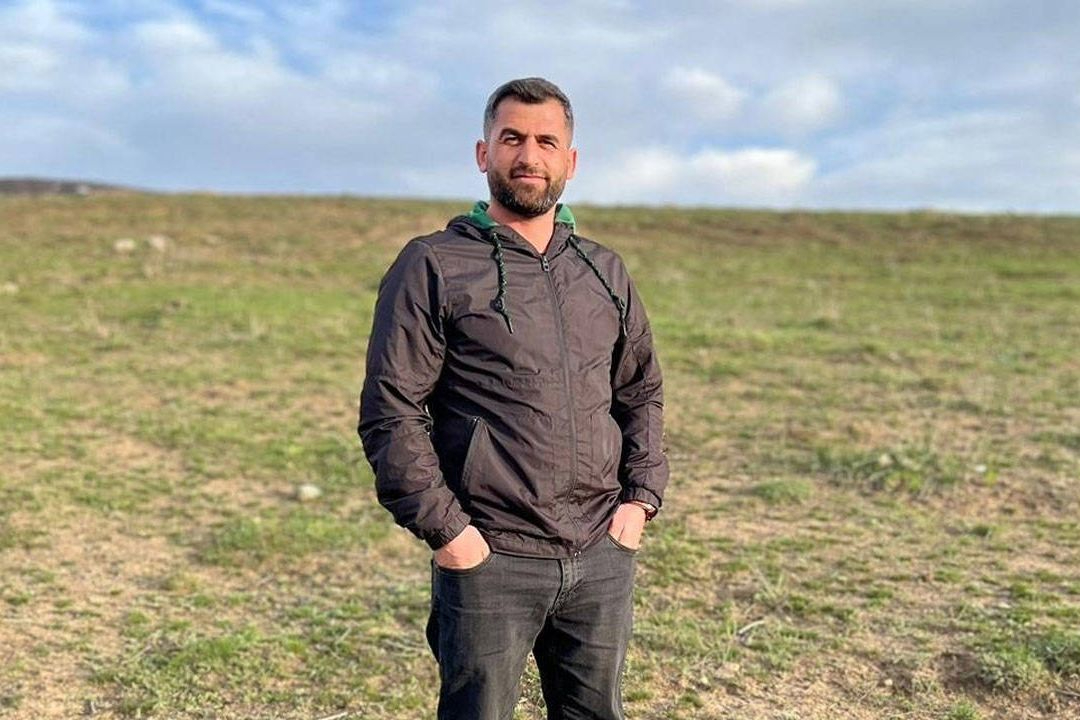
34-year-old Seyithan Durdu was shot and killed on the night of 28 December 2024 by Lieutenant Yiğithan Adalı, the Patrol Commander at the Özalp Tulgalı Border Post in the Özalp district of Van.
Ş.D. and Z.D., who were with Seyithan at the time, informed other relatives and took him to hospital. They reported that he had been shot by a soldier in the Dönerdere area. The investigation identified three soldiers who had been on patrol at the scene at the time of the incident: a battalion commander, a specialist soldier and a patrol commander. Two cartridge cases and one bullet were found during the crime scene examination.
On the same day, at the request of the Özalp Chief Public Prosecutor’s Office, the Özalp Criminal Peace Judgeship issued a restriction order preventing the parties from accessing the investigation file. An objection was lodged against the order, but no decision was issued and the objection was left without action.
The three soldiers gave statements at the gendarmerie post on the day of the incident. In his initial statement, Yiğithan Adalı said that they had detected irregular migrants with a thermal camera while on patrol. He said that, while sitting in the back seat of the vehicle, he opened the window and fired two shots into the air. However, he claimed that they had not seen Seyithan Durdu or anyone else at the scene and had never gone to the Dönerdere area. The three soldiers were released after giving their statements.
According to the autopsy report prepared by the Van Forensic Medicine Institute on 28 December 2024, the bullet that caused Seyithan Durdu’s death ruptured his aorta and shattered his spinal cord.
Yiğithan Adalı was taken into custody on 31 December 2024. In his statement to the prosecutor on 1 January 2025, however, he said that they had turned onto a side road towards Dönerdere from the Çaldıran main road and pursued Seyithan and the other two individuals. He said that, after seeing a rifle on one of them, he warned them to stop. When they did not stop, he fired several shots while sitting in the rear right seat of the vehicle. He said that he did not know whether he had shot Seyithan. When asked about the discrepancy between this account and his initial statement, Adalı admitted that he had initially made a false statement because he had been afraid at the time of the incident.
Forensic examination reports issued by the Van Gendarmerie Forensic Laboratory Directorate on 1 January 2025 and the Erzurum Regional Police Forensic Laboratory on 24 February 2025 found that the empty cartridge cases recovered from the scene had not been fired from the weapons of suspects M.Ç. and S.G. They had been fired from Yiğithan Adalı’s weapon.
The Özalp Criminal Peace Judgeship remanded Yiğithan Adalı in custody on 1 January 2025. He was released from custody six days later, on 7 January 2025.
Ş.D. and Z.D., who were with Seyithan Durdu at the time of the incident, said that they had been meeting migrants who had crossed the border irregularly that night. An investigation was opened against both of them and the relatives they had called for assistance. Arrest warrants were issued for Ş.D. and Z.D.
On 24 March 2025, the Özalp Chief Public Prosecutor’s Office issued a decision of non-prosecution in respect of M.Ç. and S.G. It relied on the forensic examination reports and the statements of Ş.D. and Z.D., who said that only one person had fired a handgun. The prosecutor found that M.Ç. and S.G. had not engaged in any act that caused Seyithan Durdu’s death.
The Durdu family’s lawyer objected to the decision, arguing that the suspects were co-perpetrators who had acted in unity of intent and action. The lawyer also argued that, after the shooting, they had fled the scene under the orders and command of M.Ç., the higher-ranking suspect. According to the lawyer, they neither called the medical services nor informed the relevant law enforcement unit, leaving Seyithan to die. The lawyer also said that they had deleted their phone call records between 03.00 and 05.00 around the time of the incident. The case file further showed that M.Ç. had sent Yiğithan Adalı a short message with the word “quiet”. The objection to the decision of non-prosecution was rejected.
On 8 April 2025, the Van Chief Public Prosecutor’s Office requested that criminal proceedings be brought against Yiğithan Adalı for “killing with eventual intent”.
On 21 April 2025, the Van 1st Assize Court issued a preliminary proceedings record. It continued the judicial control measures imposed on Yiğithan Adalı and issued a SEGBİS instruction to the court in his location for his defence and witness statements to be taken. The court also requested information from the Özalp Chief Public Prosecutor’s Office on the status of other investigations related to the incident.
The first hearing was held on 21 May 2025. The Van and Muş Bar Associations applied to join the proceedings, but the court rejected their applications. In his defence, Adalı said that he had been on duty in the area to apprehend irregular migrants and had seen three people on horseback, one of whom was armed. He said that he fired into the air when they failed to stop despite his warning. He maintained that snowfall and fog prevented him from seeing what happened. He also said that the area was a military restricted zone and that they were 50 metres away.
The following exchange took place between the presiding judge and Adalı:
–“When you hear gunfire, are you supposed to secure the area or fire into the air?”
“I do not remember anyone firing at us, but I heard gunfire. I have been serving here with honour for three years. I was saddened by the death of a citizen, even if he spoke Kurdish. But smugglers see us as enemies.”
–“While you were firing and an incident was taking place there, did you not draw up a report?”
“We fire at the border all the time. We do not keep any records of how many rounds we fire, nor do we draw up reports.”
–“Why did you delete your phone records on the day of the incident?”
“I delete my daily conversations. What matters is the duty. When I go off duty to rest, I delete all my correspondence.”
–“The statement you gave to law enforcement does not match the statement you are giving here?”
“We gave a false statement because we did not trust the Van Bar Association or the lawyer who came. That is why my two statements are different.”
Witness Z.D. said, “Seyithan did not have a rifle, and the soldiers could have detained him if they had wanted to. We did not hear the soldier’s ‘stop’ warning.” Witness Ş.D. said, “The soldier fired while aiming at us. After the second bullet, my uncle collapsed to the ground. The soldier came over to us; we begged them for help, but they did not help us. The soldiers said, ‘we did not shoot him,’ and left.”
At the second hearing on 25 September 2025, maps were added to the case file indicating that the scene and surrounding area fell within first- and second-degree military restricted zones. This contradicted information provided earlier. An on-site inspection had been conducted on 11 September 2025, but the expert report had not yet been submitted.
Records from the surveillance radars and the Şahingözü and PTZ cameras for the day of the incident had been requested from ASELSAN. However, ASELSAN reported that the records could not be provided because recordings were retained for only six months. The court continued the judicial control measures and requested the defendant’s administrative investigation file and any Şahingözü thermal camera footage covering the scene. It also sent the case file to the prosecutor for an opinion on the merits.
At the hearing on 21 November 2025, the court received the administrative investigation file concerning the defendant, and the footage it contained was handed over to the experts. The prosecutor argued that the defendant had acted lawfully when he fired without aiming at Seyithan after Seyithan failed to stop when warned. However, the prosecutor also argued that the defendant had breached his duty of care and thereby caused Seyithan’s death, and requested that he be convicted of negligent homicide. Counsel for the Durdu family, Özal Bedir, Attorney-at-Law, requested that outstanding evidence be collected. The court rejected the request.
At the hearing on 13 January 2026, the Ministry of National Defence had still not responded to the court’s official request. Counsel for the intervening parties pointed to discrepancies in the official correspondence concerning the capacity of the Şahingözü thermal camera recordings and asked the court to clarify the status of those recordings. They also argued that the defendant had not been on duty on the date of the incident and had acted outside the scope of his duties. They further requested that the digital materials be re-examined by independent experts.
The court decided to await the Ministry’s response. It also ordered an independent expert to re-examine the camera recordings from 27–28 December 2024 and ordered further inquiries into the discrepancy concerning the thermal camera recordings.
At the hearing on 8 April 2026, the composition of the trial bench had changed, and one of the experts had requested to withdraw. Counsel for the intervening parties asked the court to resolve discrepancies between the coordinates, sketches and reports concerning whether the scene fell within a military restricted zone. They also requested that the case file be referred to a new independent panel of experts and that the discrepancies concerning the Şahingözü recordings be investigated.
The court continued the judicial control measures and ordered a new panel of experts to examine the discrepancy concerning the military restricted zone and re-examine the footage and images from 27–28 December 2024.
At the hearing on 3 June 2026, new expert reports and official correspondence from the relevant institutions were added to the case file. Counsel for the intervening parties requested further examination of the discrepancies concerning the military restricted zone, the subsequently obtained thermal camera footage and the digital evidence. They also requested that the defendant and witnesses be heard again.
Defence counsel argued that the scene was within a military restricted zone and that the digital materials could not be considered evidence. The court continued the judicial control measures and decided to await the outstanding expert report. It rejected the requests for further expert examination and decided that the case file be sent to the prosecutor for an opinion on the merits once the report was received.
At the hearing on 1 July 2026, the court considered the expert report submitted to the case file. Counsel for the intervening party requested a further examination of the WhatsApp correspondence and thermal camera recordings. Counsel also asked the court to resolve the discrepancies concerning the bullet and cartridge cases and to hear the defendant, witnesses and crime scene investigation officers again. In addition, counsel pointed to discrepancies in the reports and sketches concerning the military restricted zone.
The court rejected these requests. It found that expert reports had established that the scene was within a second-degree military restricted zone and that the requested digital examinations were technically impossible. In his opinion on the merits, the public prosecutor requested that the defendant be convicted of negligent homicide. The parties were granted time to make submissions in response to the prosecutor’s opinion. The court also continued the judicial control measures.
The next hearing will be held on 25 September 2026 at 10.00.