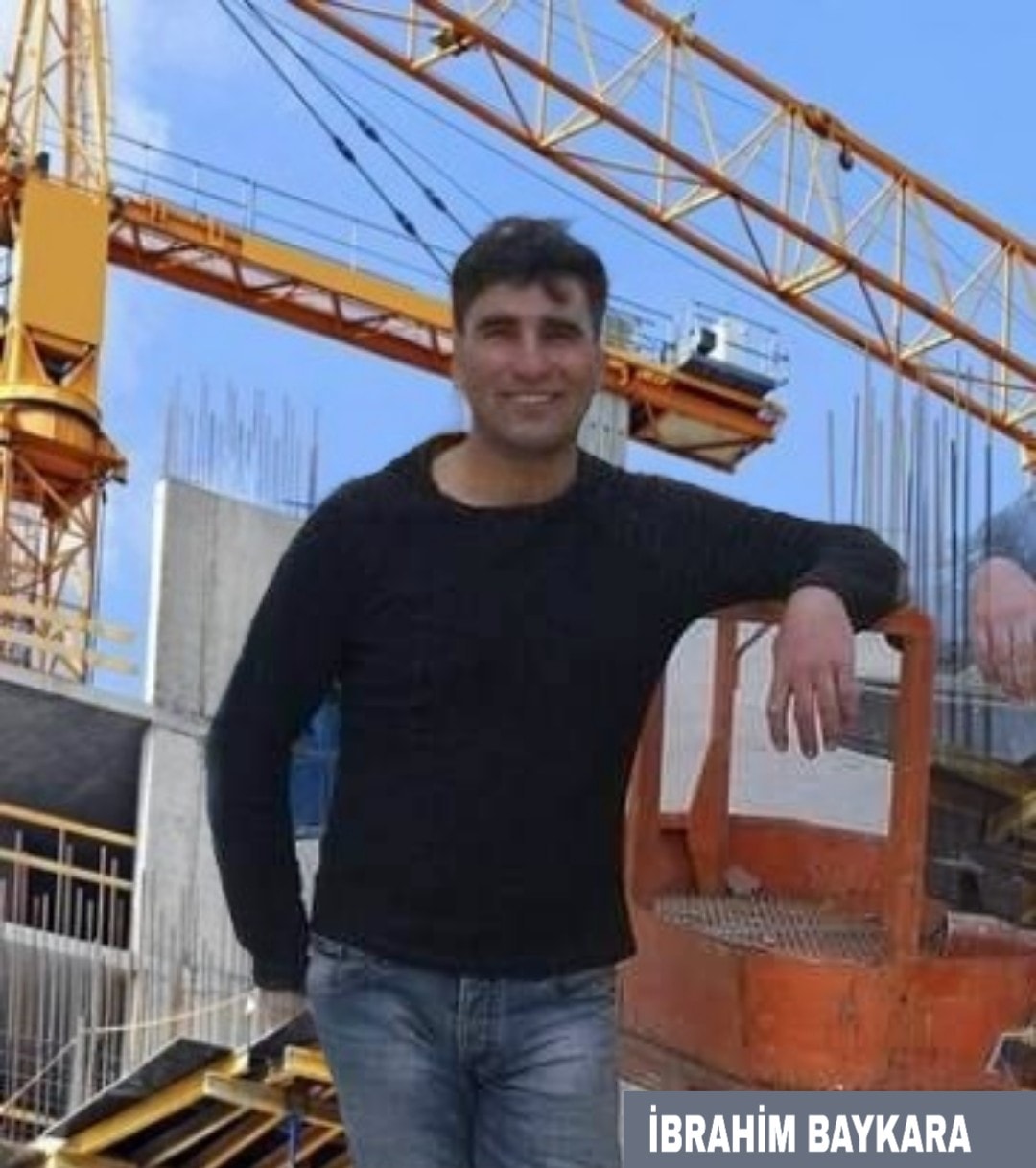
On 4 August 2020, İbrahim Baykara was killed by gunfire from soldiers in Yücellen neighbourhood, in the Çaldıran district of Van. The incident took place within Türkiye, approximately 230 metres from the border with Iran.
In a statement issued the same day, the Van Governor’s Office said that Baykara had been shot in the head and abdomen. It said that the shots had come from the Iranian side of the border and had been fired from a Kalashnikov rifle, adding that the border units did not use Kalashnikov rifles.
The Erciş Chief Public Prosecutor’s Office opened an investigation. Military personnel who were on duty that day were interviewed. They said that four people with four loaded horses had crossed the border into Türkiye. According to their accounts, the group did not stop when warned and opened fire towards the soldiers while trying to flee. The soldiers said that they fired in front of the horses and into the air in an attempt to stop them.
The following morning, the area was searched for cartridge cases, cartridges and bullets. A dead horse was found, but the soldiers did not find İbrahim Baykara. Residents of the neighbourhood later searched near the area where the soldiers had opened fire. They found Baykara and took him to hospital.
The autopsy found that Baykara died from multiple skull fractures, injuries to the brain and internal organs, and internal and external bleeding caused by gunshot wounds.
The firearms used by the soldiers on duty that day were examined during the investigation. The examination also covered cartridge cases recovered from the scene, as well as those handed over by local residents and by a lawyer from the Van Bar Association who visited the scene.
The Expert Examination Report dated 16 September 2020 found that some of the cartridge cases handed over by local residents had been fired from suspect Ahmet Can Arı’s firearm. Some of those provided by the lawyer had been fired from suspect Recep İşliyen’s firearm. The bullet recovered from İbrahim Baykara’s body was deformed, making it impossible to determine which firearm had fired it. No gunshot residue was found on the swabs taken from Baykara. The holes in his clothing indicated that he had been shot from a distant range.
The suspects said that soldiers frequently fired into the air along the border to prevent migrants from crossing. They argued that it was therefore normal to find cartridge cases from their firearms in the area. They also said that they had not gone to the area where İbrahim Baykara was found.
On 1 February 2021, an indictment was issued against Ahmet Can Arı and Recep İşliyen. It noted that it was not possible to determine which firearm had fired the bullet that caused Baykara’s death. However, both suspects had been on duty at the scene, and Recep İşliyen had admitted firing four shots into the air towards the group of four people on horseback.
The indictment considered these circumstances together with the witness statements, the crime scene examination, the expert reports and the autopsy findings and found sufficient suspicion to bring criminal proceedings. The suspects and the other soldiers on duty that day said that the group on horseback had fired towards them. The indictment therefore stated that the Assize Court should determine whether the limits of self-defence had been exceeded. It sought the conviction of both suspects for intentional killing.
The Erciş Assize Court accepted the indictment and criminal proceedings began.
At the first hearing on 20 May 2021, defendants Ahmet Can Arı and Recep İşliyen presented their defence. Arı said that four people with four horses had approached from the direction of the border that day. He said that the group had been warned to stop and given a visual warning. According to Arı, three shots were then fired towards the soldiers from the group, and İşliyen responded by firing four shots into the air.
Arı said that the group then continued towards Çilli village with three horses. During the subsequent search, the soldiers found a dead horse and smuggled goods, but no injured person.
İşliyen gave a similar account. He said that he could clearly see four people and four horses through a night-vision device. According to İşliyen, the group did not stop when warned. They accelerated and opened fire towards the soldiers, after which he fired four shots into the air. He said that he learned only later that İbrahim Baykara had died and requested his acquittal.
At the same hearing, İbrahim Baykara’s brother, Z. Baykara, was heard as a witness. He said that the three of them had gone to the Iranian border to buy fuel and were not carrying any weapons. According to Z. Baykara, soldiers opened fire after they crossed back into Türkiye and pursued them for approximately 500 metres.
He said that they ran towards a barley field, where another group of soldiers continued firing. He saw his brother İbrahim Baykara fall to the ground and noticed that he was bleeding. Z. Baykara then went to the village out of fear to inform others. When they returned, they found Baykara in the same place.
The court rejected counsel for the intervening party’s request to remand the defendants in custody. It also rejected the Van Bar Association Human Rights Commission’s application to intervene in the proceedings.
At the second hearing on 9 November 2021, counsel for the intervening party requested further inquiries into several matters, including the whereabouts of the live round shown on the crime scene sketch, the ammunition and firearm inventory, and whether border personnel had called the 112 emergency service on the day of the incident. The court rejected these requests. It also rejected the Van Bar Association’s application to intervene in the proceedings.
At the third hearing on 15 February 2022, E. Baykara, who was with İbrahim Baykara on the day of the incident, was heard as a witness. He said that the three of them were returning to Türkiye from the Iranian border when the soldiers warned them to stop. According to E. Baykara, the soldiers opened fire as they tried to continue towards the village, and he saw İbrahim Baykara being shot.
E. Baykara said that they moved some distance away and then heard another gunshot. He said that they went to the village because they were being pursued. The court granted the defendants’ request to be excused from attending future hearings. It rejected counsel for the intervening party’s request for further inquiries into the ammunition and firearm inventory, as well as the requests to remand the defendants in custody.
At the fourth hearing on 12 May 2022, two soldiers who had been on duty on the day of the incident were heard as witnesses. Counsel for the intervening party again requested an inquiry into the ammunition and firearm inventory, but the court rejected the request. The case file was then sent to the prosecutor to prepare the opinion on the merits.
At the hearing on 8 September 2022, the court noted that the opinion on the merits was not yet ready because the prosecutor had changed.
At the sixth hearing on 10 November 2022, the public prosecutor submitted the opinion on the merits, requesting that Ahmet Can Arı and Recep İşliyen be convicted of killing with eventual intent (dolus eventualis). Defence counsel was granted time to make submissions in response to the prosecutor’s opinion.
At the hearing on 22 February 2023, the Van Bar Association’s application to intervene in the proceedings was again rejected. Defence counsel argued that it had not been established that their clients had committed the offence and requested their acquittal.
The Erciş Assize Court found that both defendants had acted within the limits of self-defence in relation to İbrahim Baykara’s death. On that basis, the court decided that there were no grounds for imposing a sentence on either Ahmet Can Arı or Recep İşliyen.